
World Cup 2026 and the power of football dreams: players the whole world will watch
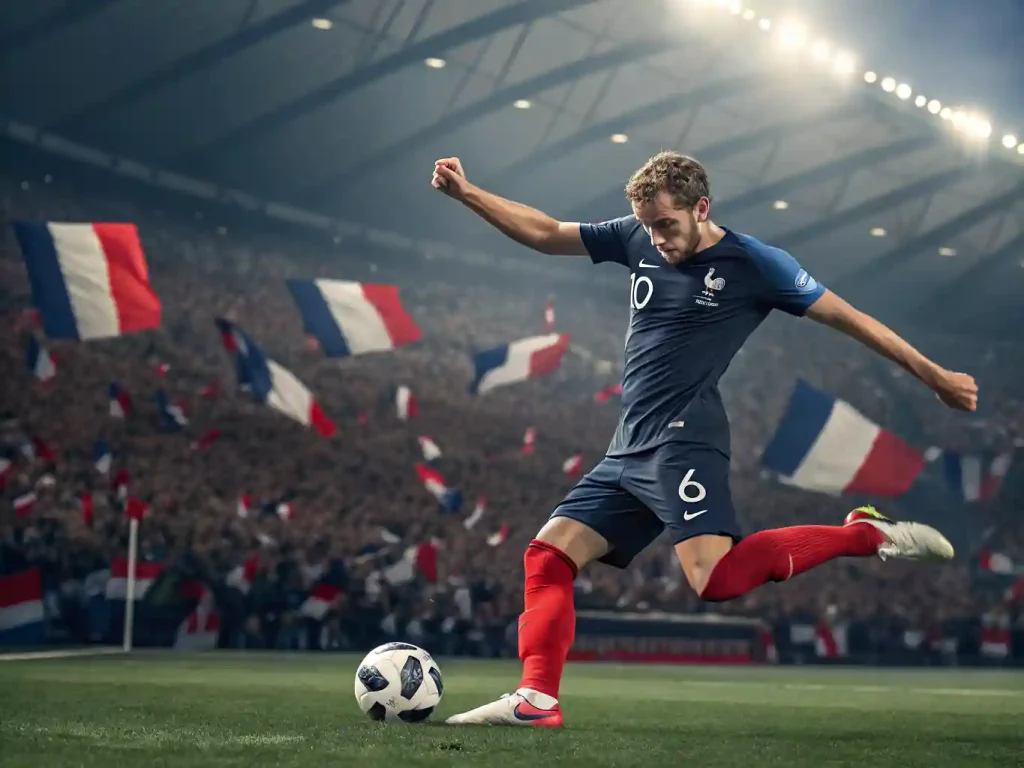
The World Cup has always been more than a tournament. It is a month when childhood memories, national pride, family sacrifice and personal ambition are compressed into ninety-minute stories. World Cup 2026 will feel even bigger because the stage itself is larger: three host countries, forty-eight teams, new football markets, old giants, debut nations and a generation of players arriving at very different moments of their lives.
Some will come to North America carrying the weight of history. Some will be chasing what may be their final chance. Some will be young enough to play without fear, yet famous enough to know that every touch can travel around the world in seconds. Others will represent countries that have never lived through a World Cup summer before. That is where the real force of football lies: not only in medals and records, but in the dreams that make a player run one more metre, take one more risk, and believe that the impossible is not as far away as it looks.
The tournament where dreams feel larger
World Cup 2026 arrives at a rare point in football history. The expansion to forty-eight teams changes the emotional shape of the competition. More nations means more stories, more first appearances, more unfamiliar shirts, and more players who will step onto the pitch knowing that their entire country is watching a scene it once only imagined.
The tournament will be played across Canada, Mexico and the United States, and that geography matters. It gives the competition a feeling of movement: huge stadiums, long journeys, different climates, varied crowds and cities with very different relationships to football. Mexico brings deep World Cup memory. The United States brings scale, commercial force and a young football culture still trying to define its voice. Canada brings the excitement of a country that has grown quickly into the global game and now has a chance to see its stars at home.
For players, this environment can be both thrilling and uncomfortable. The World Cup is never just about talent. It is about handling travel, pressure, heat, noise, changing routines and the strange emotional rhythm of tournament football. A player who looks calm in a league season can suddenly feel exposed when one mistake becomes national debate. A player who is overlooked at club level can become a hero with one brave performance.
That is why World Cup stories are so powerful. They rarely follow the clean logic of club football. A favourite can freeze. A teenager can become fearless. A veteran can find one last spark. A smaller nation can defend for eighty minutes and still make the whole world lean forward. The dream is not always to lift the trophy. Sometimes it is to score a first World Cup goal for a country. Sometimes it is to reach the knockout stage. Sometimes it is simply to prove that a team belongs on the same field as the giants.
This tournament will offer all of that. It will have superstars with global brands, but it will also have captains from debut nations, defenders whose names many fans are only starting to learn, and young attackers who see the World Cup as the moment that can change the direction of a career. The beauty is that all of those dreams share the same grass.
The icons chasing one more unforgettable chapter
Every World Cup needs its icons, and 2026 will be rich with players whose careers already belong to football history. Their challenge is different from that of a young prospect. They are not trying to introduce themselves. They are trying to shape how they will be remembered.
Lionel Messi stands at the centre of that feeling. His 2022 triumph with Argentina changed the emotional meaning of his international career. For years, every World Cup carried the question of whether he could complete the one missing piece. Now the question is softer but still powerful: what does a World Cup look like when the greatest dream has already been achieved? If he plays in 2026, the focus will not simply be on whether Argentina can defend the title. It will be on how a genius manages time, movement and pressure when his game has become less about constant acceleration and more about choosing the exact second to hurt an opponent.
That kind of player changes the atmosphere of a match. Messi does not need to dominate every minute to define the game. A pass between two defenders, a pause near the penalty area, a free-kick, a disguised touch — these are moments that can turn a quiet performance into something historic. The dream around him is no longer desperate. It is reflective. Fans will watch because every match could feel like a closing page.
Cristiano Ronaldo, if present, would bring a different emotional charge. His story has always been tied to hunger, self-belief and the refusal to accept decline quietly. For Portugal, the balance between legacy and team structure will be delicate. The squad has enough quality to compete with anyone, but the public gaze often follows Ronaldo wherever he stands. That can inspire, but it can also create tension. The human drama is clear: one of football’s most relentless competitors trying to bend time for one more global stage.
Neymar’s story, if fitness and selection allow him to lead Brazil again, would carry another kind of ache. Few players have lived so visibly between joy and pressure. Brazil does not merely want to win the World Cup; it expects beauty, rhythm and emotional release. Neymar has spent much of his international life inside that expectation. His talent has never been in doubt, but World Cups have been cruel to him through injury, controversy and collective disappointment. For him, 2026 would not just be about skill. It would be about peace with a national team career that has often felt heavier than it should.
These icons matter because the World Cup gives ageing greatness a unique stage. League football can measure decline week by week. The World Cup can still offer one month of clarity. A player may not be at his physical peak, but experience can become its own kind of speed. The best veterans understand when to slow the game, where to save energy, how to influence younger teammates, and when a single moment is worth everything.
The table below brings together several players whose World Cup dreams are likely to be followed not only for what they can do on the ball, but for the deeper story attached to their tournament.
| Player | Nation | Why the world will watch | The dream behind the spotlight |
|---|---|---|---|
| Lionel Messi | Argentina | A defending champion and an all-time great near the final stretch of his career | To add one more beautiful chapter after completing football’s biggest mission |
| Kylian Mbappé | France | A superstar already shaped by two World Cup finals | To lead France as the defining player of his generation |
| Jude Bellingham | England | A complete midfielder carrying huge expectation | To turn promise and club prestige into national glory |
| Vinicius Junior | Brazil | One of the game’s most dangerous wide attackers | To give Brazil a new emotional hero on the world stage |
| Lamine Yamal | Spain | A teenage talent with rare confidence and imagination | To show that youth can decide the biggest matches |
| Christian Pulisic | United States | The face of a host nation trying to grow into the moment | To make a home World Cup feel like a turning point for American soccer |
| Alphonso Davies | Canada | A symbol of speed, resilience and Canadian belief | To lead Canada from participation toward genuine impact |
| Eldor Shomurodov | Uzbekistan | Captain of a debut nation with a powerful football dream | To prove that a first World Cup can become more than a symbolic appearance |
| Ryan Mendes | Cabo Verde | Experienced leader of another first-time World Cup nation | To carry an island nation’s pride onto the largest stage |
| Leandro Bacuna | Curaçao | Captain of one of the tournament’s most remarkable qualifiers | To show that football identity can be larger than population size |
What connects these players is not status. Some are global superstars, while others are national heroes whose names may still be new to casual fans. The common thread is emotional responsibility. Each player represents something bigger than personal form: a farewell, a breakthrough, a country’s pride, a generation’s hope, or a first step into football history.
Young stars who can change the rhythm of the tournament
World Cups often belong to players who arrive before the world is fully ready for them. A young footballer can enter the tournament with talent, but leave it with a different identity. That transformation happens quickly. A fearless dribble, a goal in a knockout match, a calm performance against a famous opponent — suddenly a prospect becomes a global figure.
Lamine Yamal is one of the clearest examples. His appeal is not only his age, but the way he plays with imagination. He carries the ball as if pressure is something happening to other people. For Spain, that kind of talent can be especially valuable because their football tradition is often associated with control, passing rhythm and collective patience. A player like Yamal adds surprise. He can break the pattern, isolate a defender, open a match that has become too neat.
The danger for any young star is expectation growing faster than the body and mind can comfortably handle. World Cup attention is not normal attention. Every decision is replayed, every missed chance becomes a talking point, every flash of brilliance creates demands for more. The challenge is to keep the natural joy of the game while living inside a global spotlight. If Yamal does that, he can become one of the emotional faces of the tournament.
Jude Bellingham represents a different kind of youth. He is young, but he does not feel like a prospect anymore. He plays with the posture of someone already used to big rooms. England have had many talented generations, yet the national story remains marked by near-misses, penalties, painful exits and endless debate. Bellingham’s dream is not only personal. He is part of an England side that wants to stop being described through potential and start being judged through trophies.
His role will be fascinating because he gives England several identities at once. He can press, carry, arrive in the box, slow the game, create emotional intensity and lead by example. That range is powerful, but it also brings responsibility. When a player can do many things, people expect him to solve many problems. The World Cup will test not only his quality, but his ability to choose the right influence at the right time.
For Brazil, Vinicius Junior carries the electricity of a player who can change a match without warning. His dream is tied to Brazil’s broader hunger for a sixth World Cup title. The national shirt has its own mythology, and attackers are judged against ghosts: Pelé, Garrincha, Romário, Ronaldo, Ronaldinho. That can be unfair, but it is also part of the privilege of wearing yellow. Vinicius brings speed, courage and emotional edge. He plays as if every duel matters.
The key for him will be balance. In club football, he has often thrived in spaces created by elite teammates and familiar structures. At the World Cup, opponents may defend deeper, foul earlier, provoke more and treat him as the player to stop. If he turns that attention into control rather than frustration, Brazil can gain the kind of attacking force that makes supporters believe again.
Kylian Mbappé sits between youth and established legend. He is no longer the teenage sensation of 2018, yet he is still young enough to dominate the next era. His World Cup record already gives him a rare aura. The hat-trick in the 2022 final secured his place in tournament history even in defeat. For France, 2026 can be the moment when Mbappé becomes not only the most feared forward in the competition, but the full leader of a national project.
His dream is huge because he is chasing more than one trophy. He is chasing historical scale. The greatest World Cup players are remembered for repeated impact, not isolated brilliance. Mbappé has the speed, finishing and mentality to belong in that conversation. What remains is the long work of leadership: lifting teammates when the match turns, accepting tactical discipline, and carrying pressure without letting it harden into impatience.
These young and prime-age stars will give the tournament its tempo. They are the players who make defenders retreat, stadiums gasp and neutral fans choose a side for the night. Their dreams are not gentle. They want to own the future now.
Host nation heroes and the pressure of home
A home World Cup changes everything. It can lift players beyond their normal level, but it can also make every touch feel heavy. For the United States, Canada and Mexico, World Cup 2026 will be more than a sporting event. It will be a national performance in front of the world.
Christian Pulisic will carry much of that emotional load for the United States. His career has been shaped by expectation since he was a teenager. For American soccer, he became a symbol before he had the luxury of simply becoming a player. That is not easy. Every strong performance has been treated as proof that the country is progressing. Every setback has been turned into a wider argument about the limits of the American game.
A home World Cup gives Pulisic a chance to change the tone. The dream is not necessarily to win the tournament, although athletes will never publicly limit ambition. The deeper dream is to make the United States feel like a football country during the month when the world is watching. That means knockout matches, packed stadiums, emotional goals and a team that plays with enough identity to pull casual fans into the story.
The United States have other important figures, but Pulisic remains the most recognisable face. His ability to attack from wide spaces, combine centrally and arrive in decisive moments makes him vital. Yet his leadership will matter just as much as his technique. At a home World Cup, the noise is constant. Players need someone who understands both European pressure and American expectation. Pulisic has lived between those worlds for years.
Canada’s story has a different shape. Alphonso Davies is not only a brilliant footballer; he is a symbol of possibility. His speed is obvious, but his story reaches beyond the pitch. For many fans, he represents a modern Canadian football identity: diverse, ambitious, fearless and no longer satisfied with simply qualifying. Canada’s appearance at the 2022 World Cup felt like a return to the stage. In 2026, at home, the dream must grow.
Davies can affect matches from full-back, wing-back or more advanced roles. His acceleration changes the geometry of the pitch. A safe pass becomes a counterattack. A defensive recovery becomes a roar from the crowd. For Canada, the question will be how to build a collective structure that allows him to influence games without asking him to do everything. A home crowd can energise him, but it can also make the team over-reliant on his moments.
Mexico’s relationship with the World Cup is deeply emotional. The national team has tradition, expectation and a fan base that lives every match intensely. Playing at home adds pride, but it also sharpens criticism. Mexican players know that the line between celebration and frustration can be thin. For them, the dream is to turn familiarity into power: to use home atmosphere not as a burden, but as a force that unsettles opponents.
A player such as Santiago Gimenez may become central to that hope. Mexico have often had technical players, brave midfielders and passionate leaders, but a reliable World Cup goalscorer can transform a team’s ceiling. Gimenez offers penalty-box instinct and movement, and if he arrives in form, he could become one of the defining figures of Mexico’s campaign. The pressure will be fierce because home tournaments create heroes quickly and judge strikers even faster.
The host nations will also shape the tournament’s mood. When a home team plays well, the entire competition feels more alive. Streets fill earlier, neutral venues gain colour, and matches involving other nations start to feel connected to a wider festival. That is why the dreams of Pulisic, Davies, Gimenez and their teammates matter beyond their own squads. Their performances can decide whether World Cup 2026 feels like a tournament being hosted in North America or truly lived by North America.
Debut nations and the beauty of belonging
The expansion of the World Cup gives new nations a chance, but it also creates a debate. Some fear a larger tournament may dilute quality. That argument misses the emotional truth of football. The World Cup is not only a private club for traditional powers. It is also the game’s greatest invitation.
Uzbekistan will arrive with the power of a first appearance. For players such as Eldor Shomurodov, that means representing years of near-misses, regional ambition and belief that the country belongs at the top level. A debut nation does not enter the World Cup empty-handed. It brings its own football culture, its own heroes, its own memories of qualification nights and its own children who suddenly see a path that feels real.
Shomurodov’s dream is especially meaningful because he is not just chasing individual recognition. He is carrying the role of captain, reference point and symbol. For Uzbekistan, a World Cup goal would echo far beyond the stadium. A point in the group stage would matter. A win would become national history. That is the scale of the opportunity.
Cabo Verde offers another powerful story. An island nation reaching the World Cup carries a different kind of romance. It reminds fans that football talent does not only come from giant populations or wealthy leagues. It can grow through diaspora, discipline, identity and a group of players who believe that the shirt is worth suffering for. Ryan Mendes, with his experience and leadership, can become the emotional bridge between the long road to qualification and the reality of facing elite opponents.
Curaçao may be one of the most remarkable stories of all. A small Caribbean nation appearing at the World Cup forces the world to rethink what football possibility looks like. Leandro Bacuna and his teammates will not arrive with the resources of major powers, but they will arrive with something equally valuable: clarity of purpose. They know that many neutrals will watch them with curiosity at first. Their task is to turn curiosity into respect.
The dreams of debut nations often share common ingredients:
• To score the country’s first World Cup goal and give fans a memory that never fades.
• To take points from a more established opponent and change how the team is viewed.
• To show young players at home that the World Cup is not a distant fantasy.
• To leave the tournament with dignity, courage and a stronger football identity.
• To prove that smaller nations can bring tactical discipline, personality and emotional power.
These ambitions may look modest beside the trophy dreams of Argentina, France or Brazil, but they are not small. For many countries, the first World Cup is a cultural event as much as a sporting one. Families gather around screens. Streets become quiet during matches. Children learn names they will repeat for years. A goalkeeper’s save, a captain’s speech, a late corner, a national anthem sung with trembling voices — these moments become part of a country’s football memory.
The beauty of debut nations is that they remind the tournament what wonder feels like. Established teams often talk about pressure. Newcomers often talk about pride. Both emotions matter, but pride can be lighter, freer and more dangerous than outsiders expect.
The personal battles behind the global stage
The World Cup looks glamorous from the outside, but players arrive carrying private battles. Some are recovering from injuries. Some are fighting for a starting place. Some are dealing with criticism, family pressure, contract uncertainty or the fear that this may be their only chance. The tournament turns all of that into visible emotion.
For forwards, the battle is often ruthless. A striker can play well for eighty minutes and still be judged by one missed chance. A winger can beat his marker five times, but if the final ball fails, the story changes. That is why players such as Mbappé, Vinicius, Pulisic and Gimenez will be watched with such intensity. Their job is to create the moments everyone remembers, but they must do it against opponents who spend months preparing to deny them space.
Midfielders face a different kind of pressure. Bellingham, for example, will not only be judged by goals or assists. He will be judged by control, maturity and presence. Can he calm England when the match becomes chaotic? Can he make the right run without leaving the team exposed? Can he lead without forcing the game? These are subtle questions, but they often decide knockout football.
Defenders and goalkeepers live in an even harsher world. Their dreams are quieter until something goes wrong or something heroic happens. A centre-back from a smaller nation may spend most of the match clearing crosses, blocking shots and organising teammates. Then, after one clean sheet against a famous opponent, he becomes a national icon. The World Cup has always given defenders that kind of stage because survival can be as dramatic as domination.
There is also the battle of identity. Many players in 2026 will represent countries shaped by migration and diaspora. Their stories are not simple lines from birthplace to national shirt. They may have grown up in one country, developed in another, and chosen to represent the land of parents or grandparents. Modern football is full of these layered identities, and the World Cup makes them visible. For fans, that can be emotional because national belonging is not always about geography alone. It can be about family, memory, language, culture and the feeling of being claimed by a community.
The strongest players are not always the ones who avoid pressure. They are the ones who give pressure a purpose. Messi turns it into timing. Mbappé turns it into acceleration. Bellingham turns it into authority. Davies turns it into explosive movement. Shomurodov, Mendes and Bacuna may turn it into national pride. That is why football dreams survive even when the odds are harsh.
A World Cup does not ask every player the same question. For some, it asks: can you win it? For others: can you lead? Can you make people believe? Can you carry a shirt that has never been here before? Can you handle the final chapter with grace? Can you become the reason a child falls in love with the game?
The dream that will outlive the final
When the final whistle blows on World Cup 2026, the tournament will leave behind numbers: goals, assists, saves, cards, attendance, records and rankings. But the deeper memory will be built around faces. A captain in tears. A teenager smiling after a fearless performance. A veteran waving to supporters. A player from a debut nation standing still during the anthem, trying to absorb the size of the moment.
That is why the world will watch these players so closely. Not only because they are talented, and not only because they can decide matches. They will be watched because each of them carries a dream with a different shape. Messi may carry the beauty of farewell. Mbappé may carry the hunger of greatness still expanding. Bellingham may carry England’s desire to turn belief into silverware. Vinicius may carry Brazil’s longing for joy. Yamal may carry the shock of the new. Pulisic, Davies and Mexico’s leading names may carry the pressure of home. Shomurodov, Mendes and Bacuna may carry the pride of nations stepping into the brightest light for the first time.
Football remains powerful because it allows all of those dreams to exist in the same tournament. The favourite and the outsider walk through the same tunnel. The superstar and the unknown captain hear the same whistle. The ball does not care about reputation once it starts moving.
World Cup 2026 will be a huge event, but its soul will still be found in small human moments: the run no one expected, the pass that opens a defence, the save that keeps a nation alive, the goal that turns a player into memory. That is the force of the football dream. It can belong to anyone, and for one summer, the whole world will be watching.